Prints
The poem
The following is a literal translation of the poem "Andarse con mil ojos". Below, you can find a section with a more detailed explanation of its meaning:
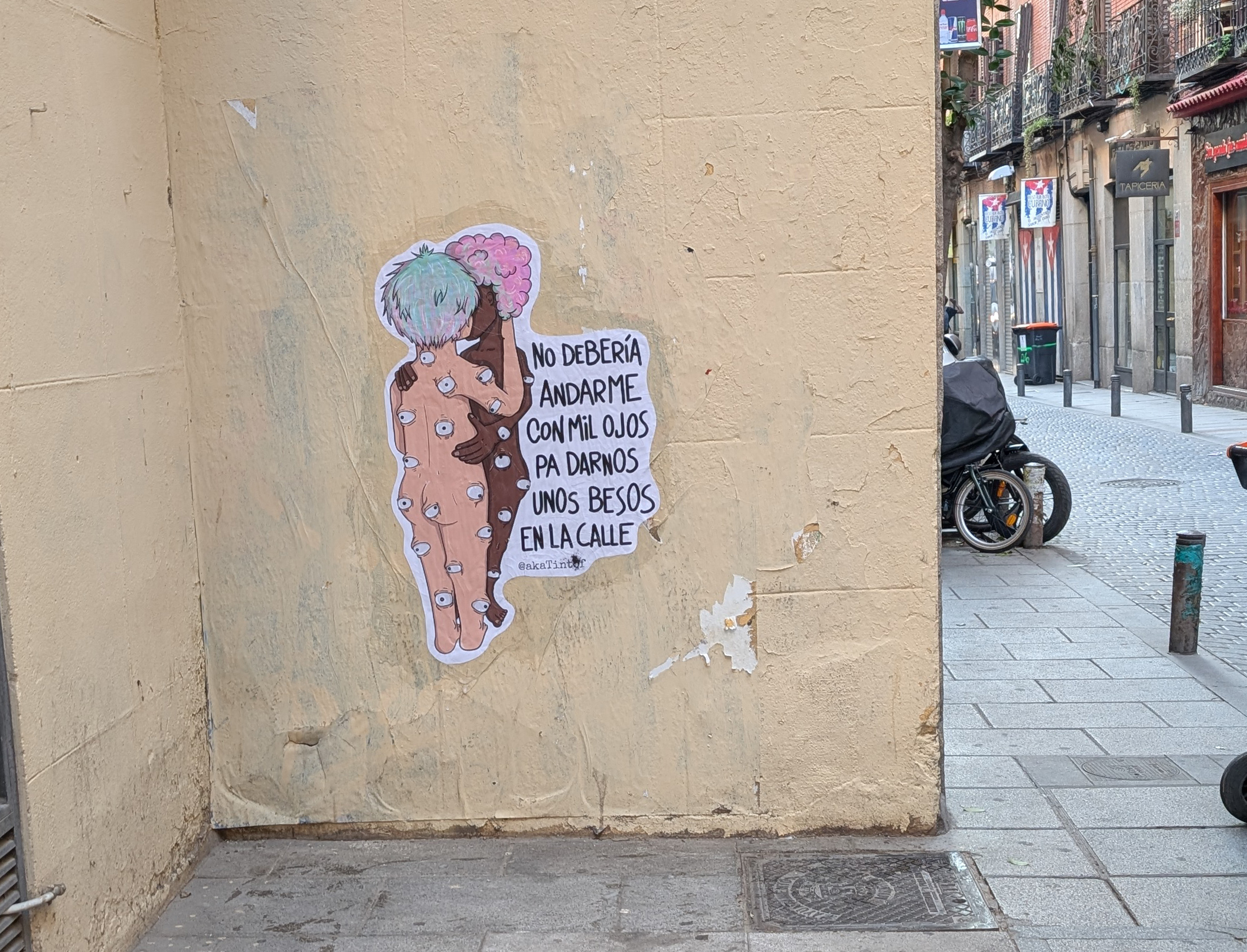
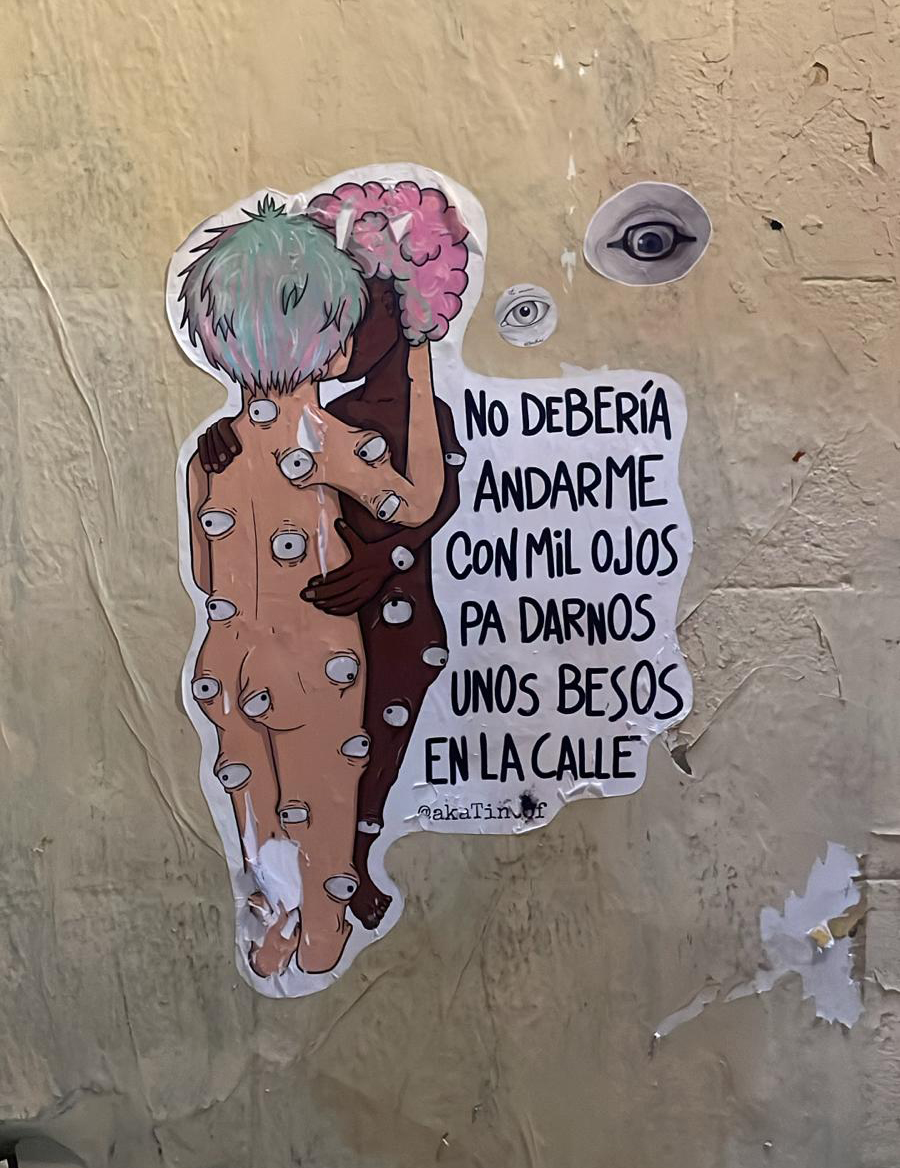
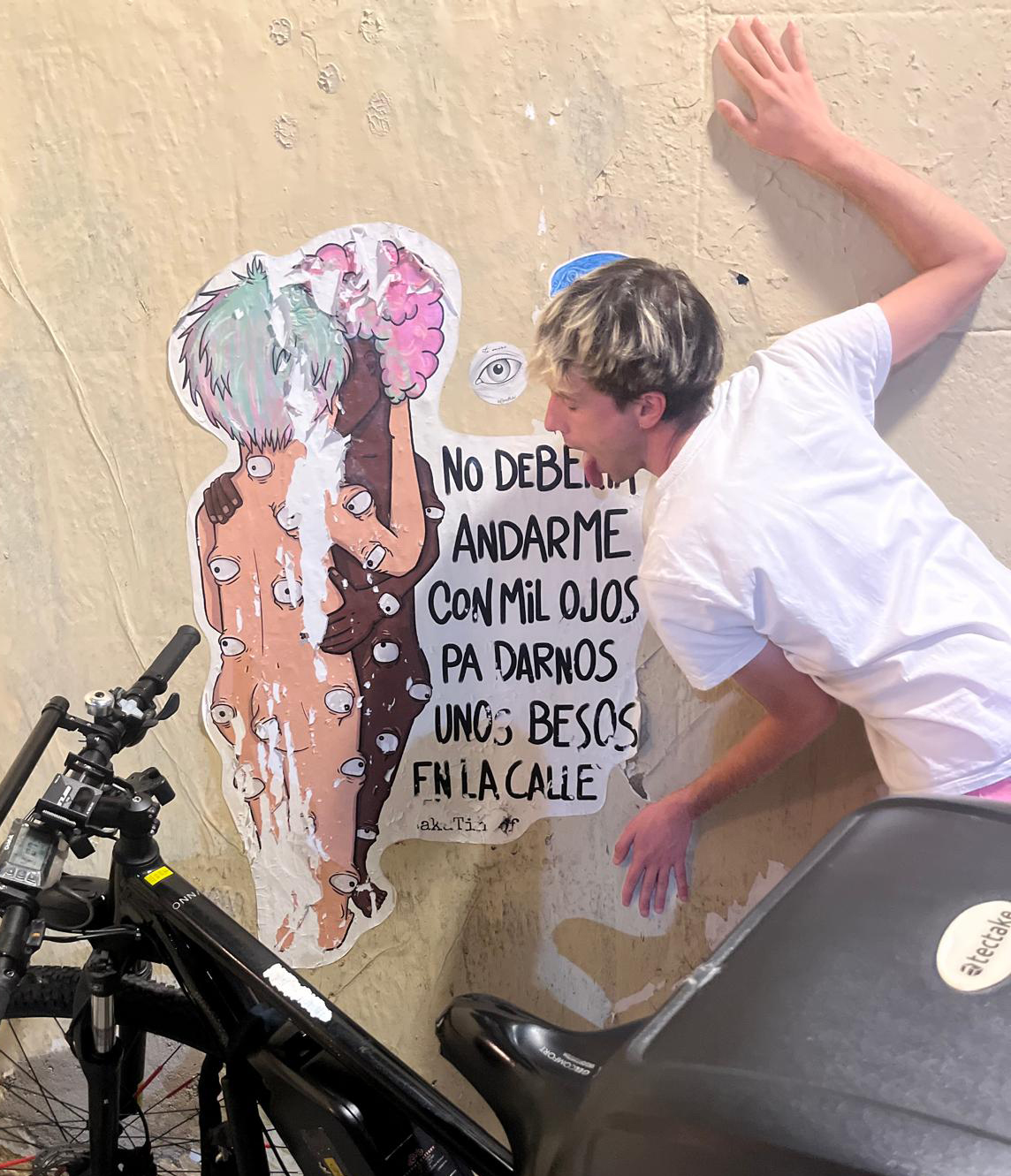
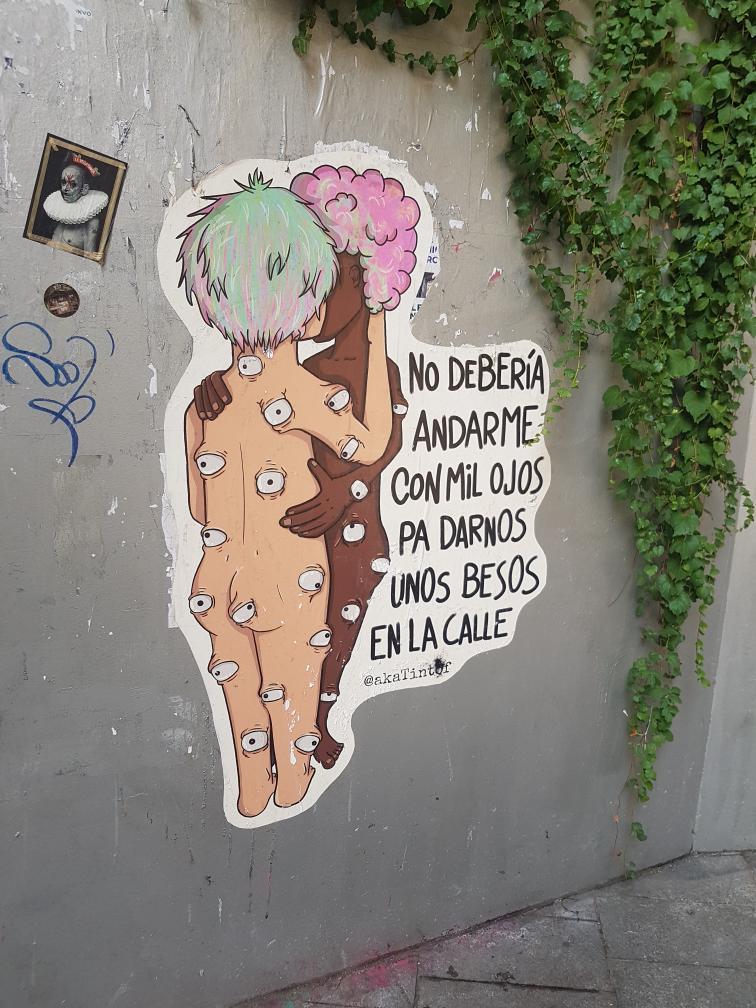
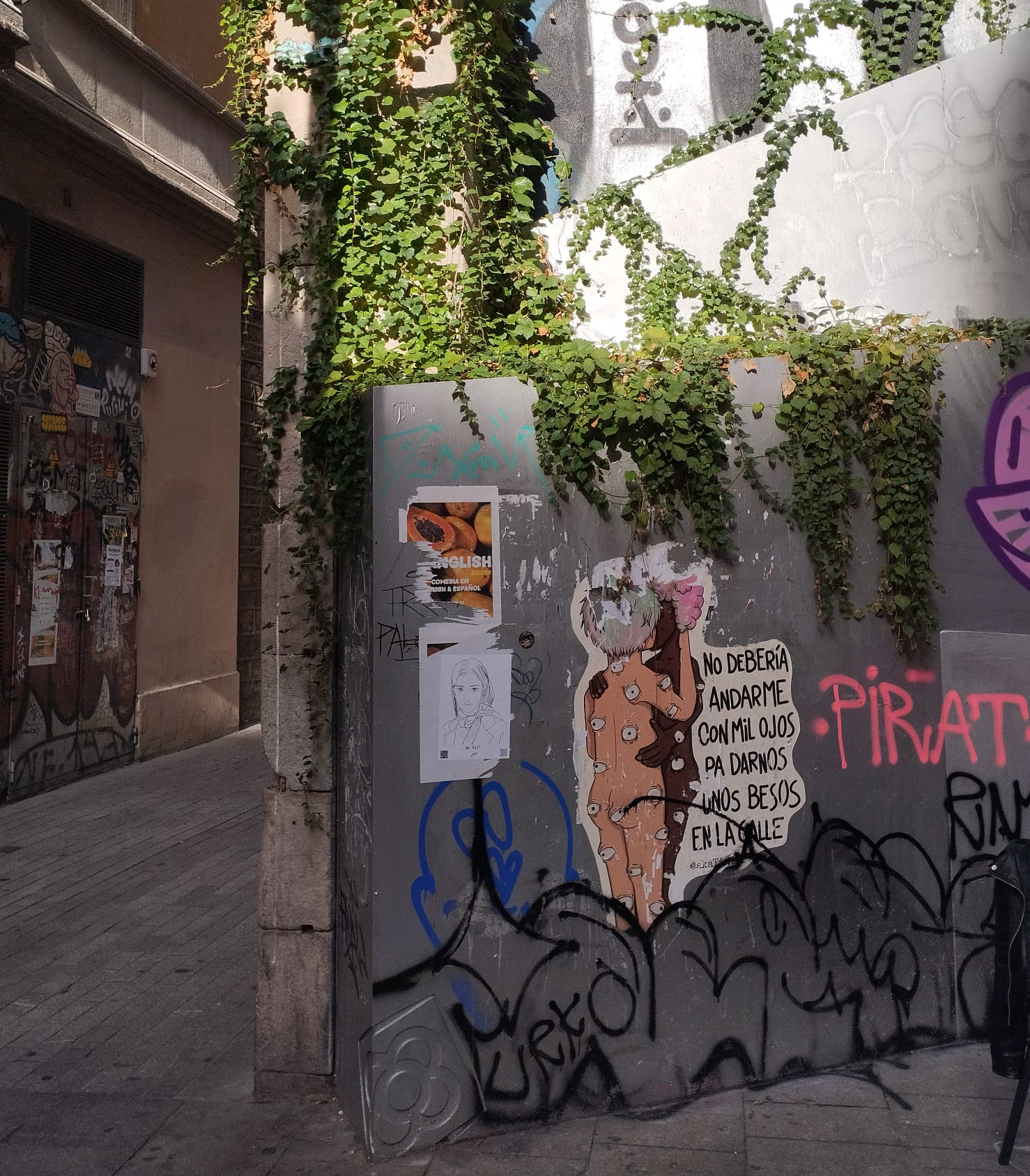
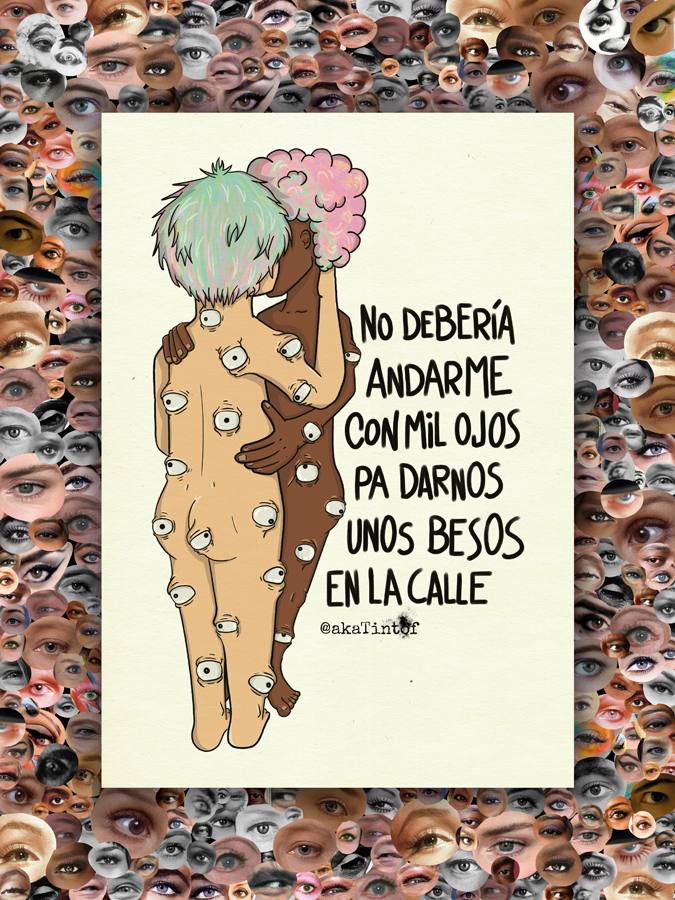
No debería / andarme / con mil ojos / pa' darnos / unos besos / en la calle.
I shouldn't / walk around / with a thousand eyes / just to give / some kisses / on the street.
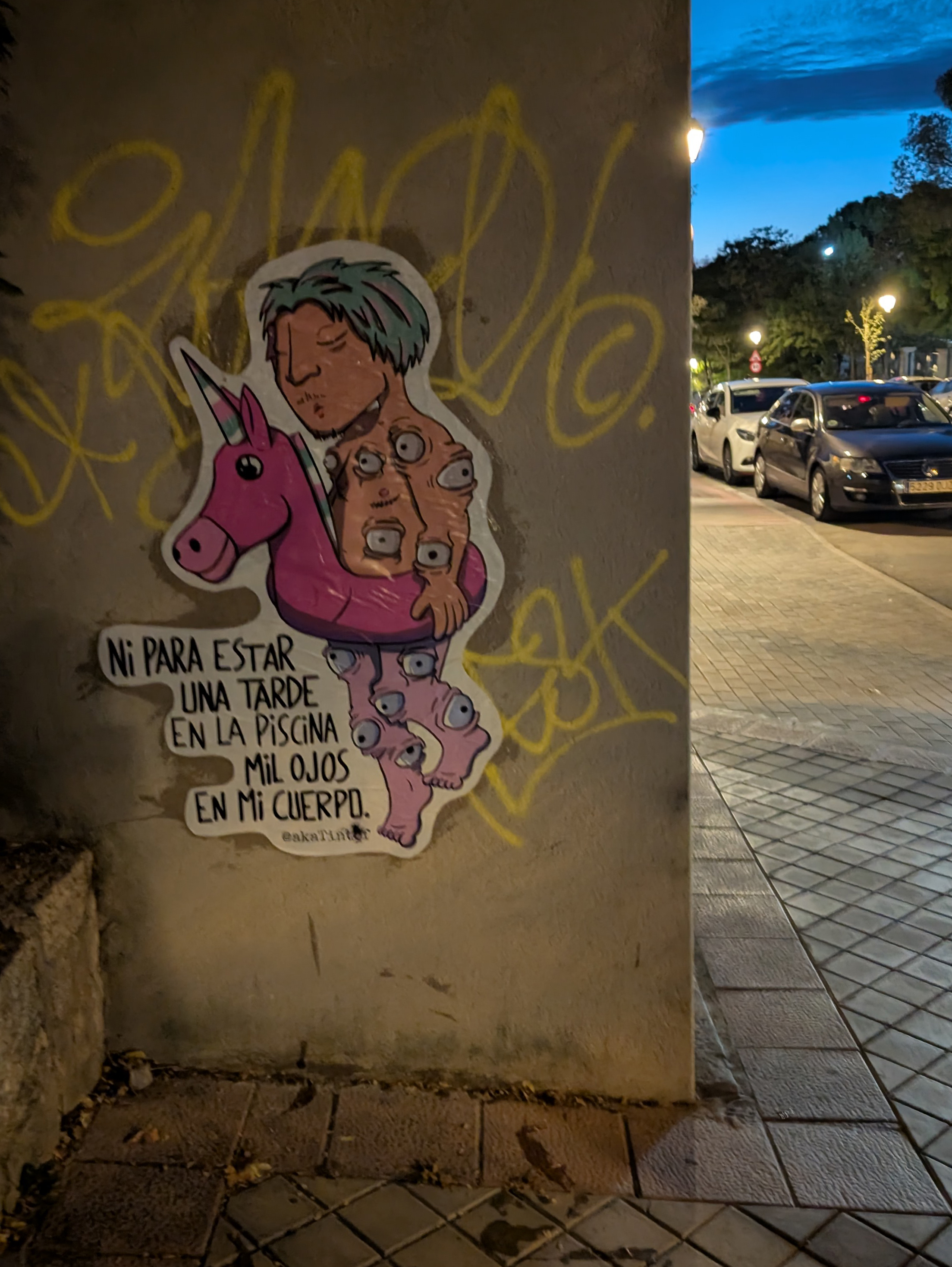
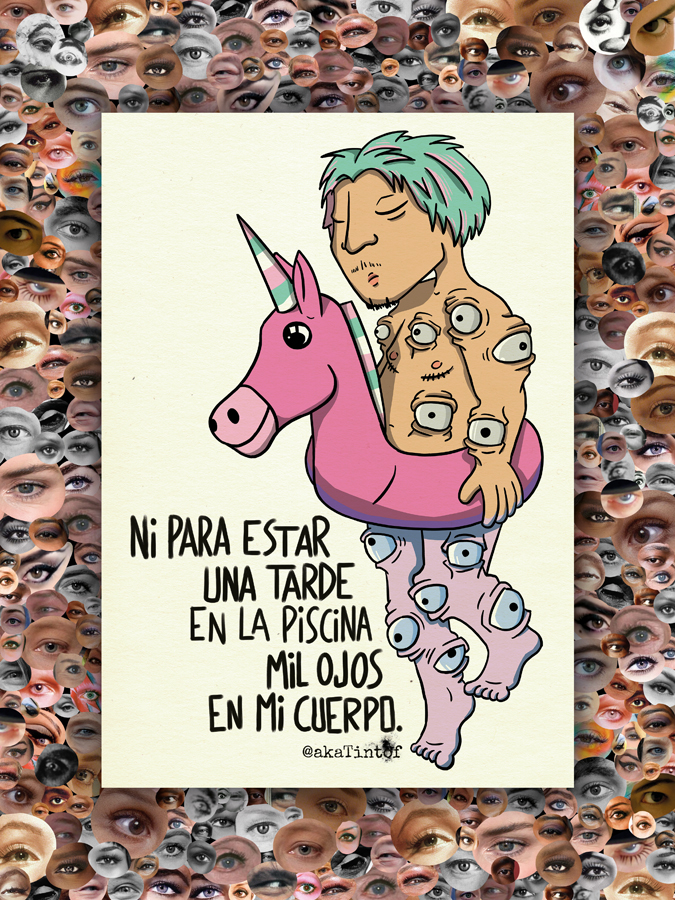
Ni para estar / una tarde / en la piscina / mil ojos / en mi cuerpo.
Nor to spend / an afternoon / at the pool / a thousand eyes / on my body.
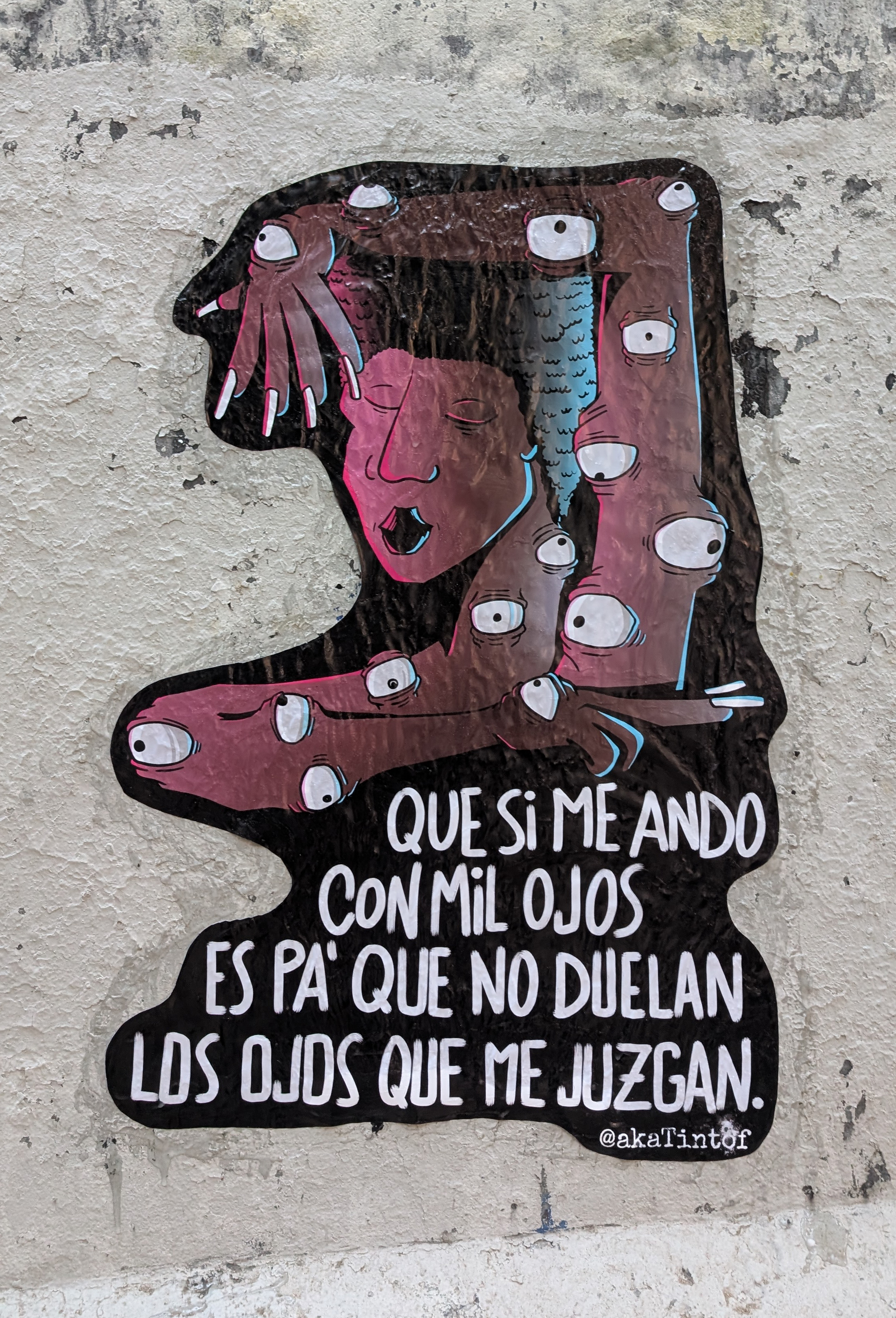
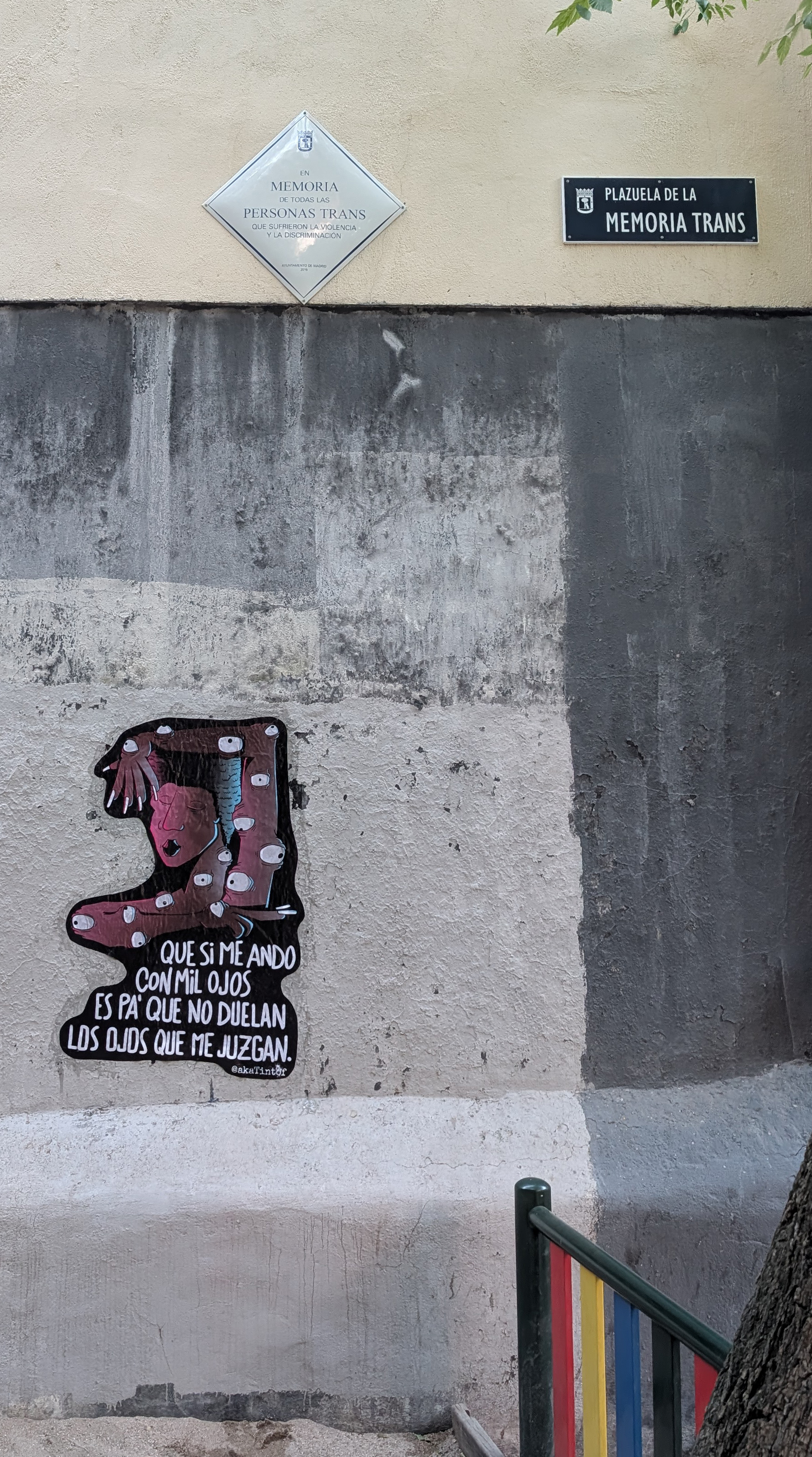
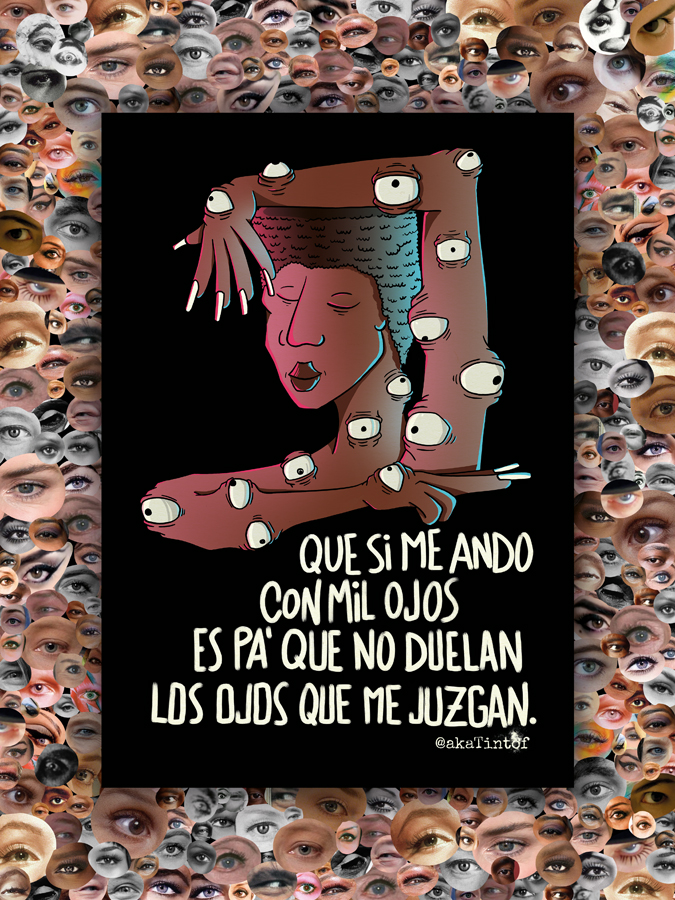
Que si me ando / con mil ojos / es pa' que no duelan / los ojos que me juzgan.
Because if I walk / with a thousand eyes / it's so that the eyes that judge me / don't hurt.
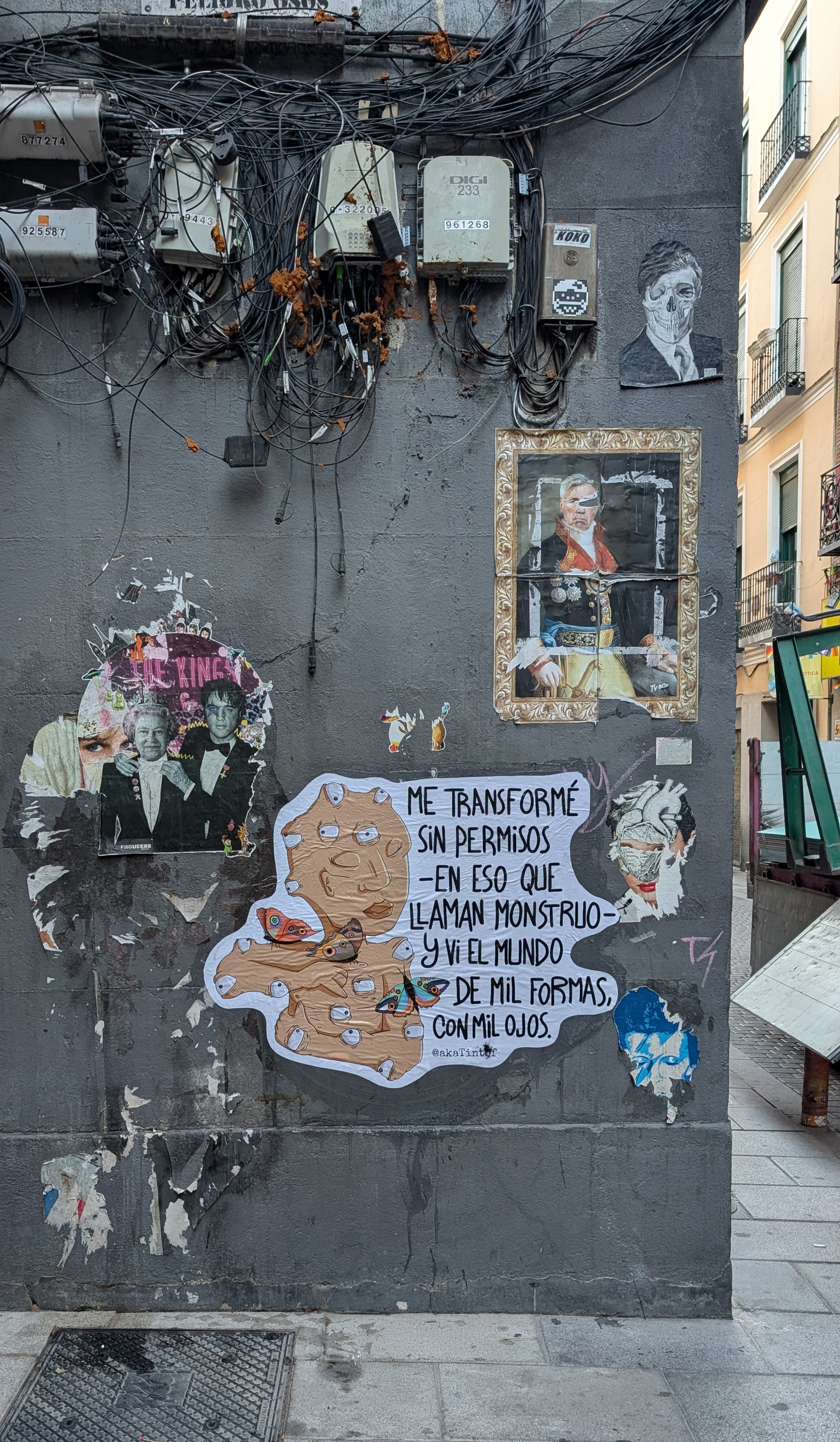
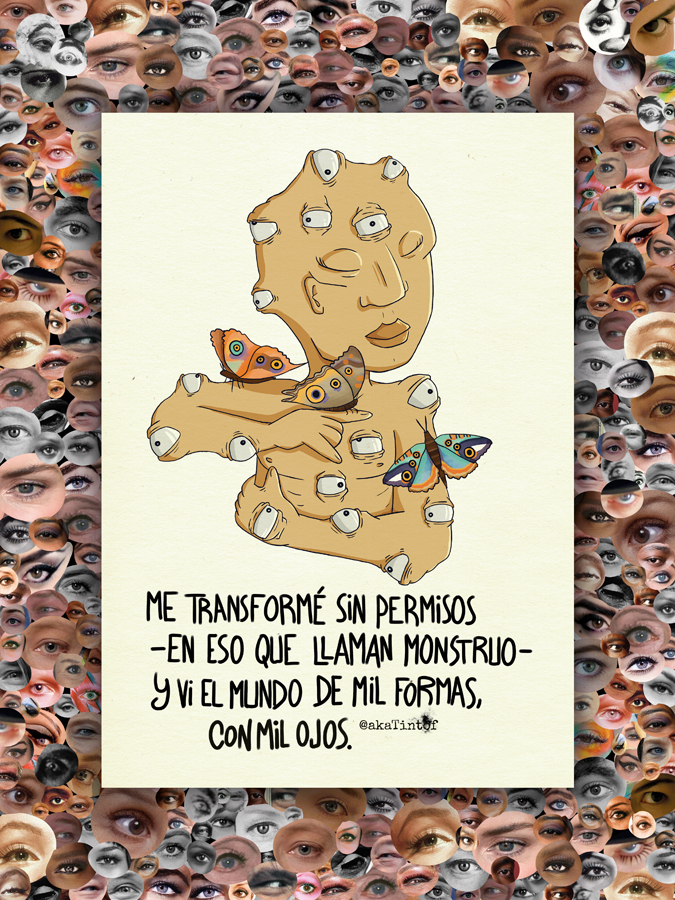
Me transformé / sin permisos / -en eso que llaman / monstruo- / y vi el mundo / de mil formas, / con mil ojos.
I transformed / without permission / -into what they call / a monster- / and I saw the world / in a thousand ways, / with a thousand eyes.
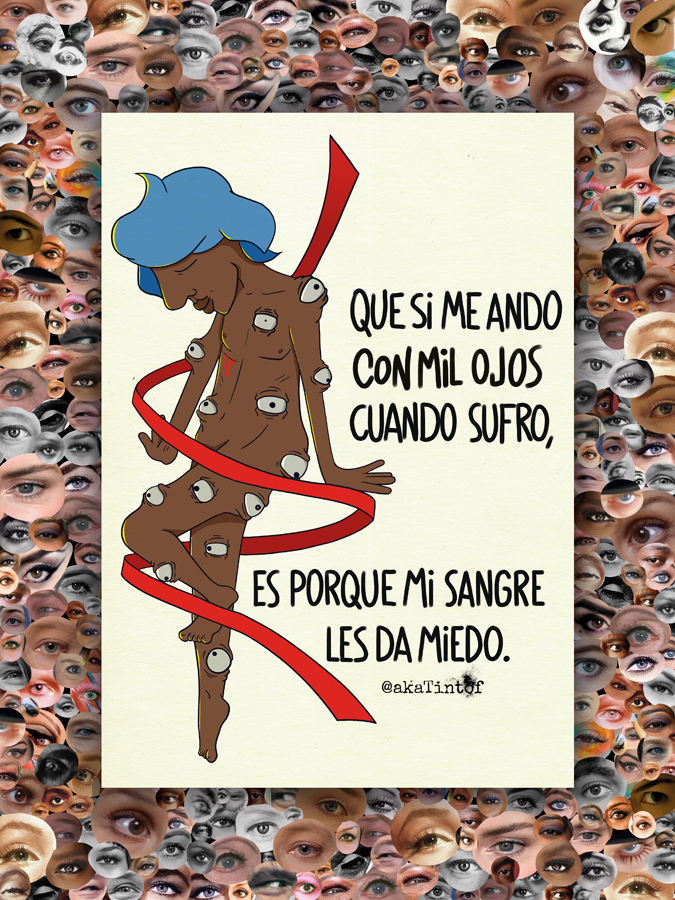
Y si sufro, / me ando / con mil ojos, / porque mi sangre / les da miedo.
And if I suffer, / I walk / with a thousand eyes, / because my blood / scares them.
Así que no, / no debería / andarme / con mil ojos / pa' exitir / en la calle / con alguien / que me quiera.
So no, / I shouldn't / walk around / with a thousand eyes / just to exist / on the street / with someone / who loves me.
About the poem
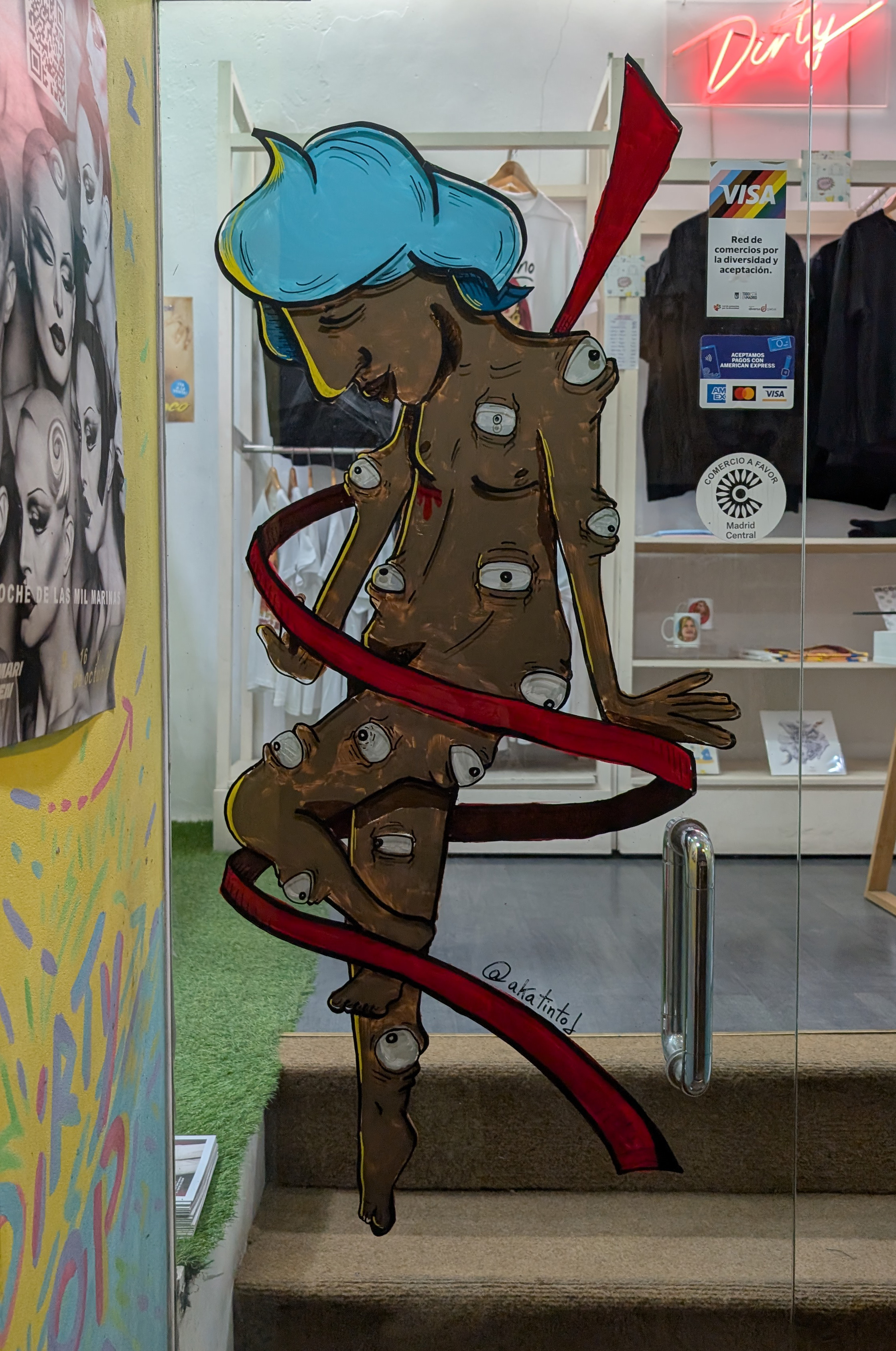
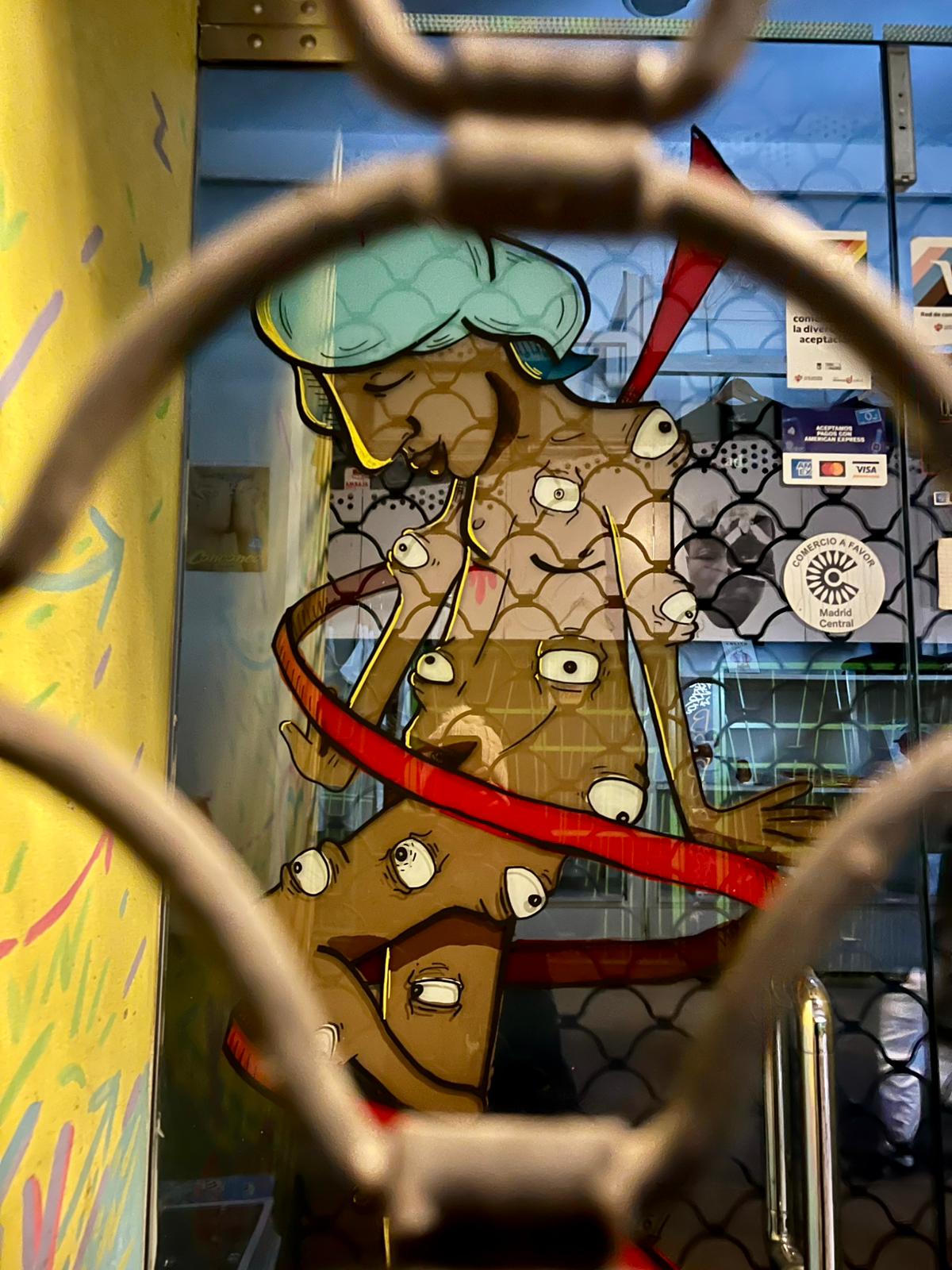
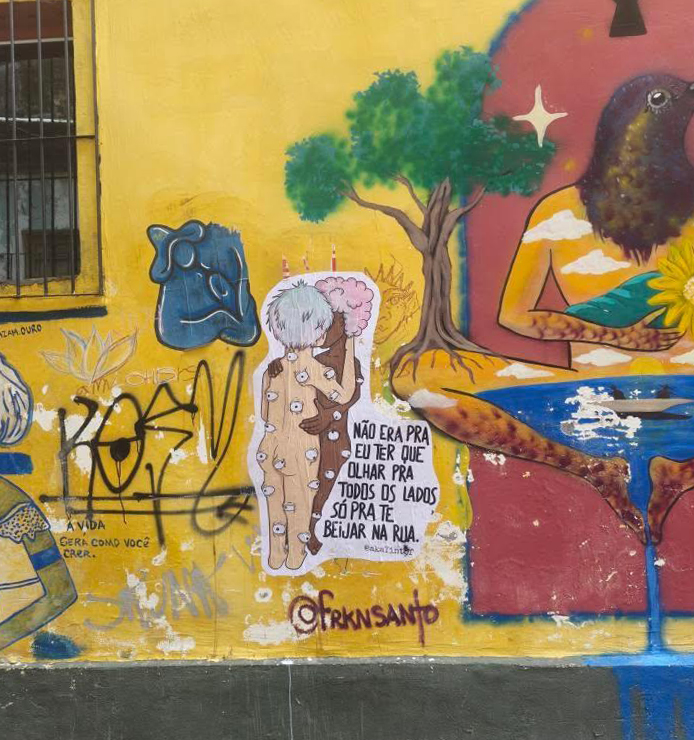
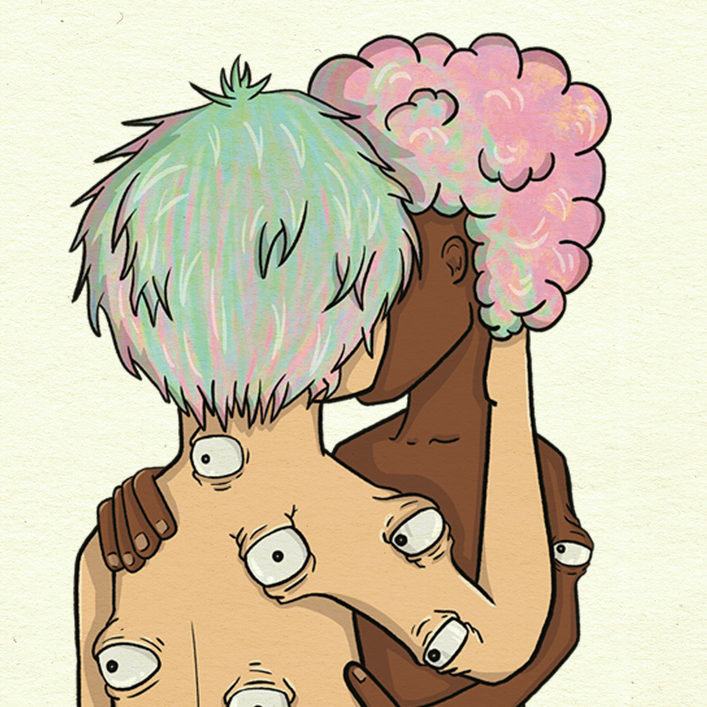
The poem “Andarse con mil ojos” explores the constant hypervigilance experienced by queer bodies and identities in public spaces. The phrase “walk around with a thousand eyes” is a metaphor for the feeling of being watched and judged at all times. Each “eye” represents the scrutiny, expectations, and potential danger that queer people face simply for existing and expressing love or affection openly.
Through its verses, the poem reflects the tension between the desire to live freely and love openly and the need to protect oneself from judgment and harm. It also addresses the personal transformation forced by fear and societal prejudice, showing how these experiences shape perception and awareness of the world.
Overall, the poem is about vulnerability, resilience, and the struggle for visibility in environments that can be hostile, conveying how constant alertness becomes both a shield and a mark of survival.
Street art
The poem comes to life when it occupies public space—when people walking down the street encounter this reality, they either identify with it, reflect on it, feel uncomfortable, or even get angry. Just as with queer people: sometimes society wants to erase us, sometimes admires us, and other times we are simply one among many.